October 26, 2026
Original details worth saving in a historic townhouse
Original details worth saving in a historic townhouse
Original details worth saving in a historic townhouse
A historic townhouse holds details that cannot be ordered from a catalog. Carved mantels, stained glass, parquet and turned balusters were all handcrafted over a century ago.
A historic townhouse holds details that cannot be ordered from a catalog. Carved mantels, stained glass, parquet and turned balusters were all handcrafted over a century ago.

A historic townhouse holds details that cannot be ordered from a catalog. Carved mantels, stained glass, parquet floors and hand-turned balusters were made by craftspeople more than a century ago. Once removed, they are rarely replaced with the same quality.
A gut renovation does not have to erase that history. The real question is which details to save, which to restore and which to rethink. Those choices define whether the home keeps its character or becomes just another renovated interior.
Why original character adds lasting value to a Brooklyn townhouse
Many Brooklyn townhouses were built in the late 1800s and early 1900s. Their interiors were shaped by solid hardwoods, plaster and decorative glass. These materials have already lasted more than a hundred years. With proper care, they can last another hundred.
Original details also carry value that new finishes cannot replicate. Buyers recognize authentic period features and often look for them. Stripping them out can make a home feel generic, even after an expensive renovation.

Seven original details worth saving
Fireplace mantels and overmantel mirrors
Carved wood mantels are often the focal point of a Victorian parlor. Many include beveled mirrors, brackets and tile surrounds. Even when the fireplace is no longer used, the mantel anchors the room and sets its scale.
Stained and leaded glass
Transom windows and door panels with stained glass filter light in a way modern glazing cannot. Loose lead lines and cracked pieces can be repaired by a glass specialist. Replacing the entire panel is rarely necessary.
Woodwork, trim and decorative screens
Door casings, baseboards, pocket doors and fretwork screens give a townhouse its rhythm. Dark original wood is often worth refinishing rather than painting. Once painted, it is very difficult to return to its natural finish.
Parquet and inlaid floors
Many period homes have parquet with decorative borders laid by hand. Damaged sections can often be patched with salvaged or matched wood. A careful sanding and refinish brings back the original pattern.
Plaster moldings and ceiling medallions
Crown moldings and ceiling medallions were cast or run in place by plasterers. Cracks and missing sections can be restored by specialists. These details are especially worth keeping when new lighting is installed, since a medallion frames the fixture.
The staircase
Newel posts, turned balusters and handrails are among the most crafted elements of the house. A staircase can be reinforced and refinished while keeping its original parts. It often becomes the natural centerpiece of the home.
Built-ins and period hardware
Original wardrobes, pier mirrors, window benches and brass hardware tell the story of how the home was lived in. They can be restored and adapted with new interiors, lighting or soft-close hinges. Their character stays while their function improves.

Balancing preservation with modern living
A townhouse that has stood for a century usually needs new systems. Wiring, plumbing, heating and insulation rarely meet current codes. The challenge is to upgrade them without damaging the details worth saving.
This starts with a careful survey before demolition. Every mantel, panel of glass and length of trim should be documented and marked for protection, removal or restoration. Pieces that must come out are labeled, stored and reinstalled later.
Layouts often change too. Families today need more bathrooms, larger closets and a kitchen that works for daily life. New rooms can be designed in the same language as the original ones, with matching trim profiles and period materials. If the house sits in a historic district, exterior changes also need approval from the NYC Landmarks Preservation Commission.
The goal is a home where old and new feel like one story.

A century-old Victorian townhouse in East Williamsburg
This Brooklyn townhouse had belonged to one family for over a hundred years. The new owners wanted a gut renovation that would keep its Victorian identity and adapt every level for modern family life.
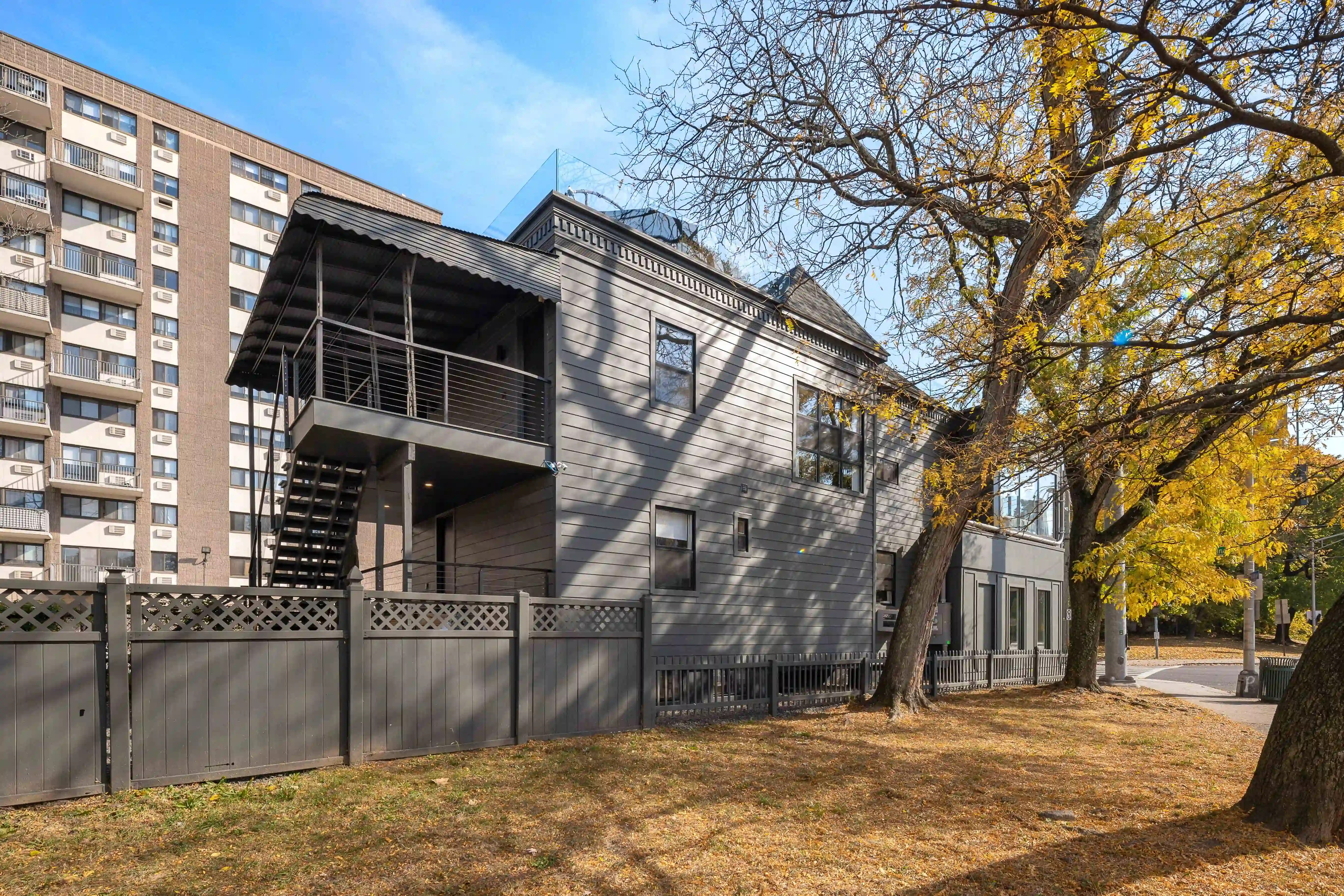
2MO reconfigured all floors, adding bedrooms, a TV room, a walk-in closet and a laundry foyer, along with three full baths and a half bath. Original woodwork, stained glass and period furniture were kept as the backbone of the interiors. A custom stained-glass skylight, commissioned from a studio in Canada, now crowns the grand staircase. Outside, vinyl siding gave way to Hardie board, exterior-grade moldings and a custom metal railing.
The house now works for a new generation while still looking like itself.
A historic townhouse holds details that cannot be ordered from a catalog. Carved mantels, stained glass, parquet floors and hand-turned balusters were made by craftspeople more than a century ago. Once removed, they are rarely replaced with the same quality.
A gut renovation does not have to erase that history. The real question is which details to save, which to restore and which to rethink. Those choices define whether the home keeps its character or becomes just another renovated interior.
Why original character adds lasting value to a Brooklyn townhouse
Many Brooklyn townhouses were built in the late 1800s and early 1900s. Their interiors were shaped by solid hardwoods, plaster and decorative glass. These materials have already lasted more than a hundred years. With proper care, they can last another hundred.
Original details also carry value that new finishes cannot replicate. Buyers recognize authentic period features and often look for them. Stripping them out can make a home feel generic, even after an expensive renovation.
Seven original details worth saving
Fireplace mantels and overmantel mirrors
Carved wood mantels are often the focal point of a Victorian parlor. Many include beveled mirrors, brackets and tile surrounds. Even when the fireplace is no longer used, the mantel anchors the room and sets its scale.
Stained and leaded glass
Transom windows and door panels with stained glass filter light in a way modern glazing cannot. Loose lead lines and cracked pieces can be repaired by a glass specialist. Replacing the entire panel is rarely necessary.
Woodwork, trim and decorative screens
Door casings, baseboards, pocket doors and fretwork screens give a townhouse its rhythm. Dark original wood is often worth refinishing rather than painting. Once painted, it is very difficult to return to its natural finish.
Parquet and inlaid floors
Many period homes have parquet with decorative borders laid by hand. Damaged sections can often be patched with salvaged or matched wood. A careful sanding and refinish brings back the original pattern.
Plaster moldings and ceiling medallions
Crown moldings and ceiling medallions were cast or run in place by plasterers. Cracks and missing sections can be restored by specialists. These details are especially worth keeping when new lighting is installed, since a medallion frames the fixture.
The staircase
Newel posts, turned balusters and handrails are among the most crafted elements of the house. A staircase can be reinforced and refinished while keeping its original parts. It often becomes the natural centerpiece of the home.
Built-ins and period hardware
Original wardrobes, pier mirrors, window benches and brass hardware tell the story of how the home was lived in. They can be restored and adapted with new interiors, lighting or soft-close hinges. Their character stays while their function improves.
Balancing preservation with modern living
A townhouse that has stood for a century usually needs new systems. Wiring, plumbing, heating and insulation rarely meet current codes. The challenge is to upgrade them without damaging the details worth saving.
This starts with a careful survey before demolition. Every mantel, panel of glass and length of trim should be documented and marked for protection, removal or restoration. Pieces that must come out are labeled, stored and reinstalled later.
Layouts often change too. Families today need more bathrooms, larger closets and a kitchen that works for daily life. New rooms can be designed in the same language as the original ones, with matching trim profiles and period materials. If the house sits in a historic district, exterior changes also need approval from the NYC Landmarks Preservation Commission.
The goal is a home where old and new feel like one story.
A century-old Victorian townhouse in East Williamsburg
This Brooklyn townhouse had belonged to one family for over a hundred years. The new owners wanted a gut renovation that would keep its Victorian identity and adapt every level for modern family life.
2MO reconfigured all floors, adding bedrooms, a TV room, a walk-in closet and a laundry foyer, along with three full baths and a half bath. Original woodwork, stained glass and period furniture were kept as the backbone of the interiors. A custom stained-glass skylight, commissioned from a studio in Canada, now crowns the grand staircase. Outside, vinyl siding gave way to Hardie board, exterior-grade moldings and a custom metal railing.
The house now works for a new generation while still looking like itself.
Planning a renovation of a historic townhouse?
Book your free consultation or call us at (212) 660-0078.

Can damaged original woodwork be restored?
How do you protect original details during construction?
Do I need Landmarks approval to renovate a Brooklyn townhouse?
Can a Victorian townhouse have a modern kitchen and bathrooms?
Is it worth restoring stained-glass windows?
Can damaged original woodwork be restored?
How do you protect original details during construction?
Do I need Landmarks approval to renovate a Brooklyn townhouse?
Can a Victorian townhouse have a modern kitchen and bathrooms?
Is it worth restoring stained-glass windows?
Can damaged original woodwork be restored?
How do you protect original details during construction?
Do I need Landmarks approval to renovate a Brooklyn townhouse?
Can a Victorian townhouse have a modern kitchen and bathrooms?
Is it worth restoring stained-glass windows?
CUSTOMER REVIEW
5.0
"We hired 2MO to work on our brand new flagship store on 99 Madison Avenue, and we could not be happier with their service."
Roberto De Franceschi
Managing Director - Boffi | De Padova New York

5 Stars (32 reviews)

5 Stars (22 reviews)
YOU MAY ALSO LIKE